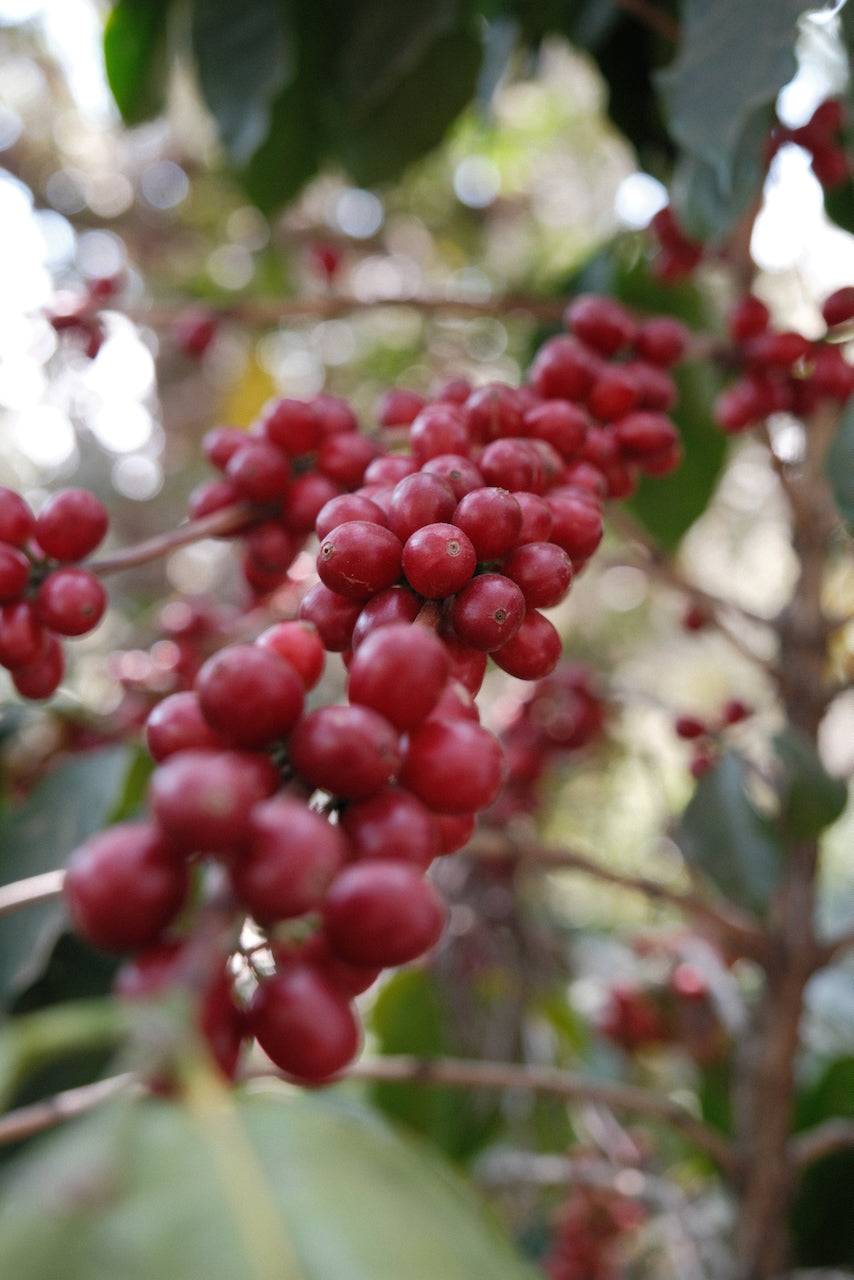
Artemio Hernandez farms just outside of the fabled Huehuetenango region - at a breathtaking 2150MASL in the village of San José Nueva Esperanza, in the department of San Marcos. His 60 cuerdas farm is made up of mostly bourbon and has grown substantially since he started started planting coffee on just eight cuerdas in 2009. In 2011, he worked with an Anacafé agronomist to transition to organic coffee production and these days is especially proud that he chose to invest in coffee rather than sell his land, as the nearby Marlin mine has changed the local economy with significantly volatile land prices.
Artemio works on the farm year-round, and employs only organic practices. During the year, he’s pruning coffee and the 700 grevillea shade trees, preparing organic fertilizers, and harvesting. His farm is well-suited to organic production: with a cold climate at the high elevation, shade trees to help protect the coffee from temperature extremes, and they add organic matter to the soil as the leaves fall. He produces his own organic fertilizer using manure and urine from his head of 10 cattle, adding that to the coffee pulp, honey water from washing, grevillea leaves, and lime. He’s adapted his organic practices to the increasing difficulty of finding labor and strongly believes that organic farming has merits for both environmental and economic reasons.
Artemio has his own wet mill, and he picks only ripe cherries, de-pulping them the same day that they’re picked. Rather than fermenting in a traditional tank, he puts the de-pulped coffee in closed corn sacks for about 24 hours- he likes these sacks because they’re more permeable than the thicker nylon coffee sacks, which allows the mucilage to escape, and the fermentation process progresses faster. From there, he washes the coffee in a tank, and leaves it submerged in clean water overnight. The next day, he washes the coffee again before spreading it directly on the concrete patio to drain extra moisture away. From there, it moves to a nylon sheet for the final drying stage-with the idea being that the nylon protects the parchment from the excessive friction against the concrete, reducing the risk of the parchment cracking as the coffee dries.
This lot was sourced for us in partnership with Shared Source, a company we have worked with since LVC's inception due to their socially impactful purchasing and relationships with farmers. This lot is a primary example of the types of individuals Shared Source & Little Victories chooses to work alongside with, showcasing excellent processing standards and high attention to detail growing. We're thrilled to have Artemio's coffee for the first time.